

Gomeda Valley Cappadocia: Hiking Trail & Entrance Fee
Gomeda Valley is one of Cappadocia’s lesser-known natural attractions, located near Mustafapaşa in the Ürgüp district of Nevşehir, Türkiye. With its streamside walking trails, ancient rock-cut churches and historic dovecotes, the valley offers a peaceful alternative to Cappadocia’s more frequently visited hiking destinations. Often called Little Ihlara because of its resemblance to Ihlara Valley, Gomeda is an inviting place to explore the region’s natural beauty and cultural heritage.
Unlike Cappadocia’s open landscapes dominated by fairy chimneys, Gomeda Valley features a stream winding between rocky slopes, wooded areas and caves once used as living spaces. Its combination of greenery, historic structures and quiet trails makes it particularly appealing to visitors who enjoy exploring nature on foot.
Planning a visit to Gomeda Valley in Cappadocia? This guide covers its location, entrance fee, directions, hiking routes, historic attractions and practical tips to help you make the most of your trip.
|
Visitor information |
Details |
|
Location |
Mustafapaşa, Ürgüp, Nevşehir, Türkiye |
|
Nearest town |
Mustafapaşa, approximately 5 km from Ürgüp |
|
Entrance fee |
Free |
|
Official hiking route |
7,079 metres (approximately 7.08 km) |
|
Average hiking time |
3.2 hours (approximately 3 hours 12 minutes) |
|
Trail conditions |
Narrow, uneven paths requiring care |
|
Main attractions |
Alakara Church, St. Basil’s Church, rock-cut dovecotes |
|
Best time to visit |
Spring and autumn |
Table Of Content
Where Is Gomeda Valley in Cappadocia?
Gomeda Valley is located approximately 2 kilometres southwest of Mustafapaşa, a historic village in the Ürgüp district of Nevşehir, and north of Ayvalı village. Mustafapaşa, about 5 kilometres from Ürgüp, is one of the main access points for visitors planning to explore the valley.
The valley connects with Üzengi Valley, forming a longer natural walking corridor. For this reason, some hiking routes are referred to as the Gomeda–Üzengi Valley trail.
The stream flowing through the valley and the surrounding vegetation create a landscape quite different from Cappadocia’s more exposed, rocky valleys. In spring, the greenery along the stream adds to the appeal of the walk.
Gomeda Valley Map
Use the Gomeda Valley map below to see its location in relation to Mustafapaşa, Ürgüp and other nearby attractions.
Before setting off, check your intended trailhead rather than relying solely on the general valley marker. Hiking routes through Gomeda and Üzengi valleys may have different starting and finishing points.
How to Get to Gomeda Valley
To reach Gomeda Valley, travel towards Mustafapaşa from Ürgüp. From Mustafapaşa, local roads heading towards Ayvalı village provide access to the valley’s hiking starting points.
Visitors staying in Göreme can explore Gomeda Valley as a day trip. Since direct public transport to the trailhead may be limited, travelling by private car or arranging a transfer can be more convenient.
Is There Parking at Gomeda Valley?
There are places to leave a vehicle near the valley entrance. Parking in the entrance area is free, although these spaces should not necessarily be considered an officially managed car park.
Choose a safe place to park without obstructing the road or access for other vehicles.
The walking routes inside the valley are closed to motorised and non-motorised vehicles, so the valley must be explored on foot.
Plan Your Return Journey Before Starting the Hike
If you intend to complete a longer Gomeda Valley hike, it is important to decide where your walk will begin and end.
Some routes continue towards Üzengi Valley and are walked in one direction. Returning along the same trail can therefore increase the total distance considerably.
Arranging your return transport in advance is a practical option if you plan to complete the longer route.
Is There an Entrance Fee for Gomeda Valley?
Gomeda Valley is free to enter. There is currently no regular ticketing system for access to the valley, although visitor arrangements may change over time. It is worth checking the latest entrance and parking information before your trip.
You should also prepare for limited facilities along the hiking route. Do not assume that cafés, kiosks or toilets will be available inside the valley.
If you are planning a longer walk, bring enough drinking water, snacks and any other essentials you may need.
Gomeda Valley Hiking Trail: Distance and Route
The Gomeda Valley hiking trail follows a stream through a landscape of rocky slopes, ancient churches and historic dovecotes. It offers an opportunity to experience both the natural scenery and cultural heritage of Cappadocia.
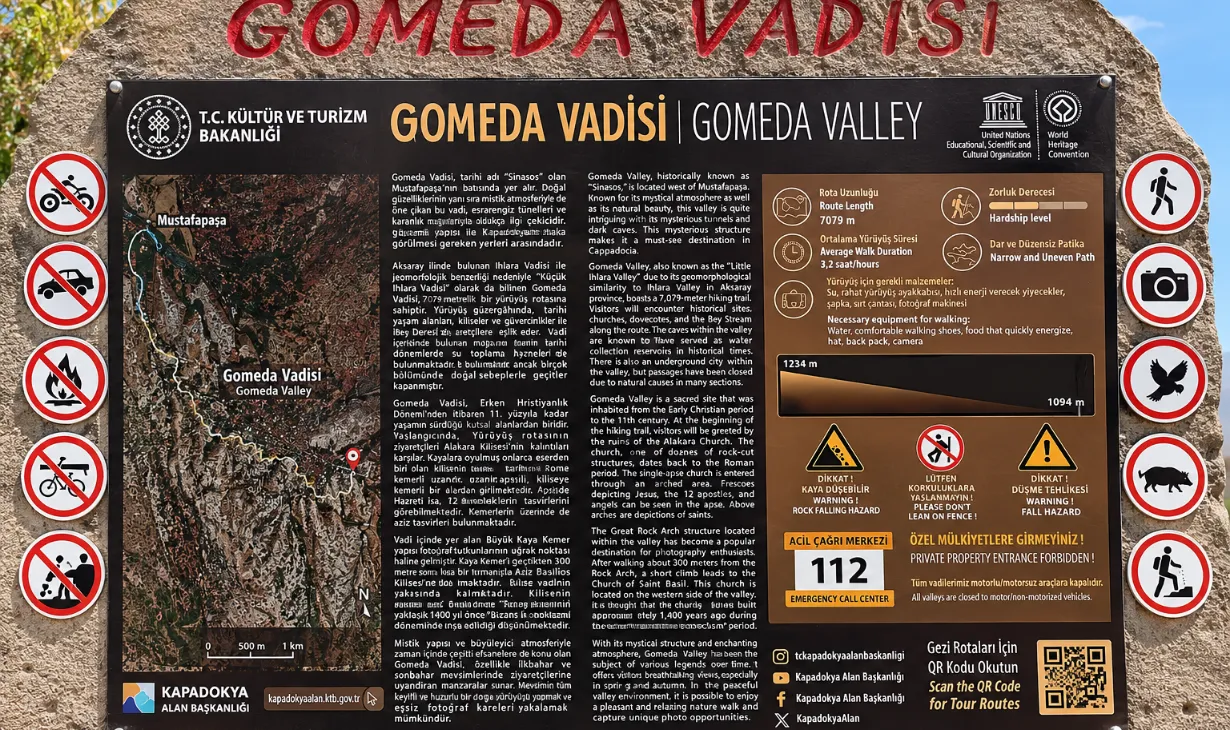
According to the official information board at the entrance to Gomeda Valley, the designated hiking route is 7,079 metres long, with an average walking time of 3.2 hours.
The information board also shows an elevation profile ranging from approximately 1,234 metres to 1,094 metres above sea level. Visitors are warned about narrow and uneven paths, as well as potential rockfall and fall hazards in certain sections.
These figures refer to the route described on the official information board. The total distance may vary if you choose a different starting or finishing point.
Short Gomeda Valley Walk
If you have only a couple of hours to explore Gomeda Valley, you can concentrate on the paths near the entrance and visit some of the nearby historic structures.
Alakara Church, located close to the entrance, and St. Basil’s Church, situated along the hiking route, are among the most interesting places to discover.
A shorter walk near the stream allows you to enjoy the valley’s peaceful atmosphere without committing to the entire route.
Keep in mind that trail conditions change with the seasons. Rain can make dirt paths muddy and slippery, so suitable walking shoes are recommended even for shorter visits.
Gomeda–Üzengi Valley Hiking Route
For those looking for a longer hike, the route from Gomeda Valley towards Üzengi Valley offers a rewarding journey through Cappadocia’s natural and historic landscape.
The trail follows the stream, passing through wooded sections and narrow rocky passages. Along the way, you may encounter rock-cut chambers, former living spaces and dovecotes carved high into the surrounding cliffs.
One of the notable landmarks along the route is the Great Rock Arch. According to the official information board, St. Basil’s Church can be reached after walking approximately 300 metres beyond the arch and following a short uphill section.
Some parts of the route may require crossing the stream. Water levels and ground conditions vary throughout the year, so take extra care after rainfall.
The official average hiking time is 3.2 hours. However, your pace, photography stops and time spent exploring historic structures may extend your walk.
Is the Gomeda Valley Hike Difficult?
Some parts of Gomeda Valley are suitable for a relatively easy nature walk, but longer routes may involve rocky paths, stream crossings and uneven ground.
The official information board warns visitors about narrow and uneven trails, rockfall hazards and areas where there is a risk of falling. For this reason, the difficulty of a hike should not be judged by distance alone.
During spring, rainfall can increase water levels and leave sections of the trail muddy. Visitors with limited hiking experience and families with young children may find the shorter paths near the entrance more suitable than the full trail.
Things to See in Gomeda Valley
Gomeda Valley is known not only for its scenery but also for its remarkable rock-cut structures. Ancient churches, dovecotes and former living spaces offer glimpses into a time when the valley was part of an inhabited and productive landscape.
Alakara Church (Timios Stavros Church)
Alakara Church, also known as Timios Stavros Church, is located near the entrance to Gomeda Valley. The name Timios Stavros means Holy Cross in Greek.
Dating back to the Byzantine period, the church is an important part of the valley’s historical character. The structure is believed to have been used and modified during different periods, reflecting Cappadocia’s long tradition of rock-cut architecture.
Exploring the area around Alakara Church offers an insight into the religious and community life that once existed in Gomeda Valley.
St. Basil’s Church
St. Basil’s Church is another significant rock-cut religious site in Gomeda Valley. According to the official visitor information board, the church is believed to have been constructed approximately 1,400 years ago, during the Byzantine Iconoclasm period.
Named after St. Basil, an important figure in Christian history, the church is a fascinating stop for visitors interested in Cappadocia’s historic places of worship.
The church can be reached by walking approximately 300 metres beyond the Great Rock Arch and following a short uphill path.
To help preserve the site, avoid touching the wall paintings or carved rock surfaces.
If you would like to discover more of the region’s religious heritage, explore our guide to 13 must-see churches in Cappadocia.
Ancient Rock-Cut Dovecotes
One of the most distinctive sights in Gomeda Valley is the collection of dovecotes carved into the high rock walls.
In Cappadocia, dovecotes once played an important role in agriculture. Pigeon droppings were collected and used to fertilise vineyards and gardens, making these structures a valuable part of local farming practices.
The dovecotes in Gomeda Valley are reminders of this agricultural past. Some also feature decorative details that make them particularly interesting to observe.
The Stream and Ancient Cave Dwellings
The Bey Stream running through Gomeda Valley gives the area much of its distinctive character. Trees and vegetation growing along the water create an appealing contrast with the surrounding rocky slopes.
During your walk, you may also encounter chambers carved into the rock that were once used for shelter and everyday activities.
The official information board also mentions rock-cut spaces that historically served as water collection reservoirs. These structures illustrate how people adapted the natural landscape to meet their everyday needs.
To learn more about the region’s remarkable underground heritage, read our guide to Cappadocia’s underground cities.
The History and Legends of Gomeda Valley
The history of Gomeda Valley reveals a fascinating contrast between its peaceful appearance today and its past as an inhabited area.
Nearby Mustafapaşa was historically known as Sinasos. The rock-cut structures, churches and living spaces around Gomeda suggest that people occupied and used this landscape over many centuries.
According to local accounts, the valley was once home to a settlement of approximately 600 households. However, this figure should be understood as a traditional account rather than a confirmed historical population record.
Best Time to Visit Gomeda Valley
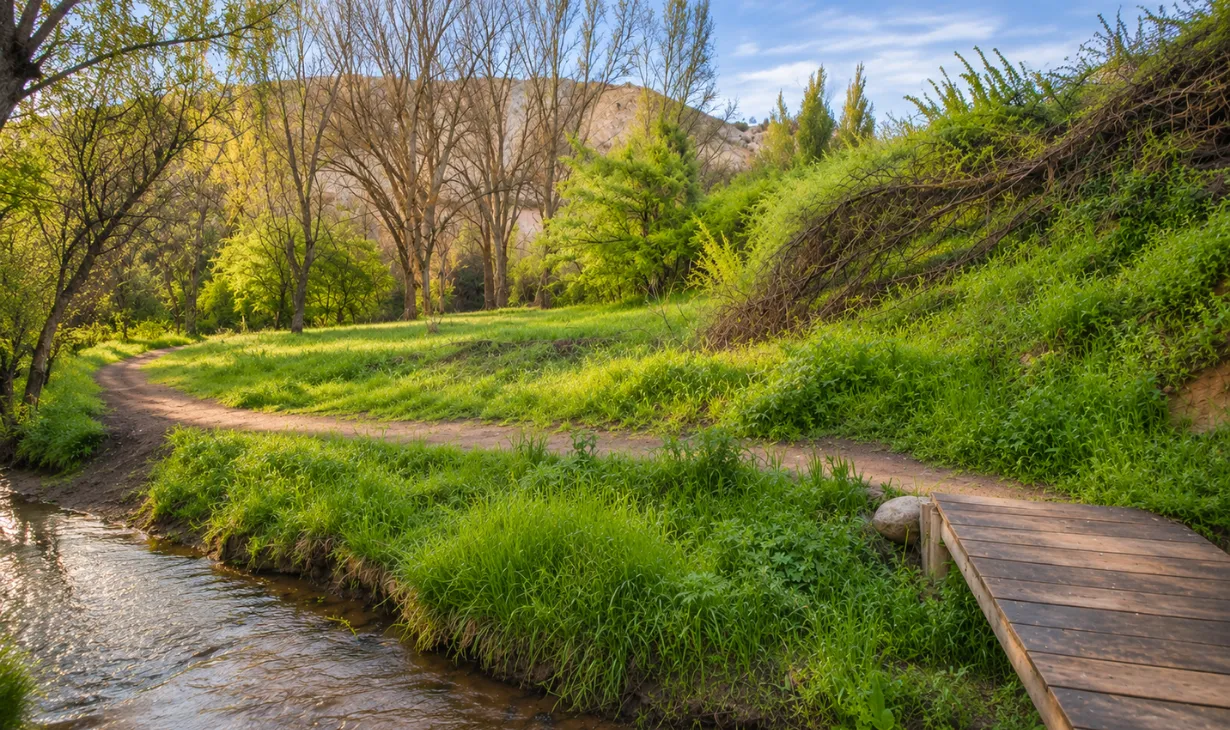
The best time to visit Gomeda Valley is generally spring or autumn, when temperatures are often more comfortable for walking. However, trail conditions can vary considerably depending on the weather and recent rainfall.
Spring: Vegetation along the stream becomes greener, creating one of the valley’s most attractive seasonal landscapes. Rain can also make paths muddy and stream crossings more difficult.
Summer: Wooded sections provide some shade, but daytime temperatures in Cappadocia can be high. Starting your hike early in the morning is usually more comfortable.
Autumn: Milder temperatures and changing seasonal colours make autumn another appealing time to explore the valley on foot.
Winter: Cold weather, ice and precipitation may make the trails more challenging. Check the forecast and ground conditions before attempting a longer hike.
Whatever the season, avoid hiking through the valley during conditions that could make stream crossings or rocky paths unsafe.
Tips for Visiting Gomeda Valley
A little preparation can make your Gomeda Valley hike more comfortable, especially if you plan to explore the longer trails.
- Wear suitable hiking shoes. Choose footwear with good grip for rocky and occasionally wet ground.
- Bring water and snacks. Do not rely on finding shops or refreshment facilities along the route.
- Download an offline map. Mobile reception may be unreliable in some sections of the valley.
- Plan your return. If you choose a one-way trail, arrange transport from your finishing point in advance.
- Follow safety warnings. Watch for rockfall and fall hazards, avoid leaning on protective fences and do not enter private property.
- Respect the natural and historic environment. Take your rubbish with you and avoid damaging rock-cut structures or historic wall paintings.
Gomeda Valley vs Pigeon Valley: Which Should You Visit?
Gomeda Valley and Pigeon Valley offer two different ways to experience Cappadocia’s natural and cultural landscapes.
Gomeda Valley stands out for its streamside trails, wooded areas, wild fruit trees, quiet atmosphere and historic churches. It is particularly appealing to visitors looking for a peaceful setting and a longer walk through nature.
Pigeon Valley, located between Göreme and Uçhisar, is a popular hiking destination known for its rock-cut dovecotes and classic Cappadocian scenery. It may also be more convenient to reach for visitors staying in Göreme.
Both valleys offer opportunities to discover the region’s distinctive relationship between nature, history and local traditions.
For more hiking inspiration, explore our guide to Cappadocia’s valleys and nature walks. If you are looking for another scenic route, particularly one known for its sunset views, read our guide to Red Valley in Cappadocia.
Explore Mustafapaşa Village After Visiting Gomeda Valley
A visit to Gomeda Valley can easily be combined with time in nearby Mustafapaşa, one of Cappadocia’s most interesting historic settlements.
Formerly known as Sinasos, Mustafapaşa is celebrated for its traditional stone architecture and multicultural heritage.
Walking through the village streets offers an opportunity to admire historic stone houses and experience a different side of Cappadocia, away from its most famous viewpoints.
Combining Gomeda Valley with Mustafapaşa allows you to explore both the region’s natural scenery and its architectural heritage in a single day.
Where to Stay When Visiting Gomeda Valley
Although Gomeda Valley is located near Ürgüp and Mustafapaşa, it can be visited as a day trip from other parts of Cappadocia.
If you are planning to spend several days in the region, choosing accommodation based on access to multiple attractions may be more convenient than staying close to just one valley.
Göreme is one of Cappadocia’s most popular places to stay, thanks to its central location, restaurants, local businesses and access to nearby hiking trails.
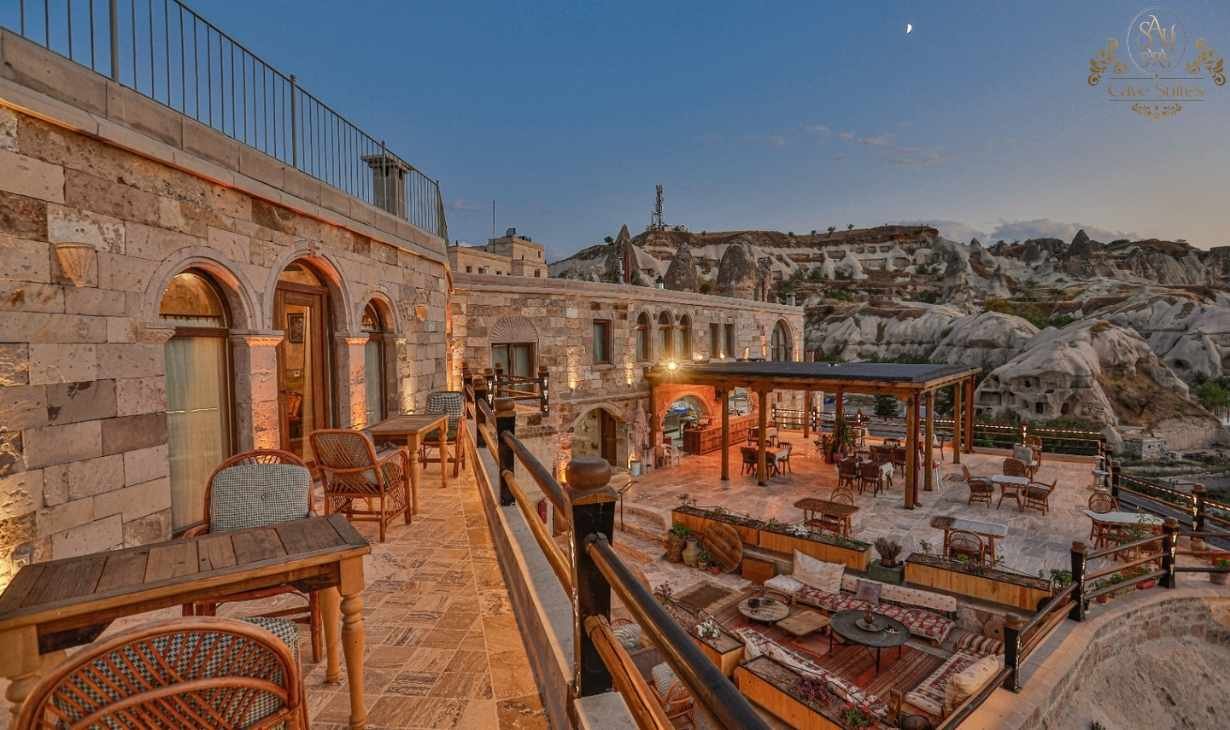
Located in the heart of Göreme, Şah Saray Cave Suites is a luxury boutique cave hotel that combines traditional Cappadocian architecture with modern comfort and halal-certified hospitality.
Featured in the MICHELIN Guide 2026 Hotel Selection, our hotel provides a welcoming base for guests who wish to explore the region’s remarkable natural and cultural attractions.
You can plan a day trip to Gomeda Valley and spend other days discovering Göreme’s surrounding valleys, historic sites and scenic viewpoints.
Explore the rooms and suites at Şah Saray Cave Suites or read our guide to where to stay in Cappadocia to compare different areas.
OUR CLOSE TO ACCESS POINTS

Experiences & Activities
Apart from our in-hotel services, we also support you with airport transfers, culture-art tours and various activities.
Close to Tourist Attractions!
Our hotel is very close to many important points where you can visit with pleasure.